Migrate, validate and change SAP data — with full control.
Validation, load simulation and four-eyes approval before data reaches SAP — in a migration programme or in everyday operations. AI suggests, your people approve.
Migration programmes, data quality and everyday data changes all touch the same master-data objects. We run all three through validation, simulation, four-eyes approval and an audit trail. The software is vise DMW; the project work is our migration team; the everyday operations are a managed service — take one, two or all three.
Built for SAP ECC and S/4HANA — and works with any source and any target: other ERPs, IBM Maximo, Business Central, databases, flat files. Systems →
One workbench for migration and data quality, where business and IT work on the same data: extract from any system, validate and profile, map fields and values, simulate the load, post through the target’s standard interfaces, report.
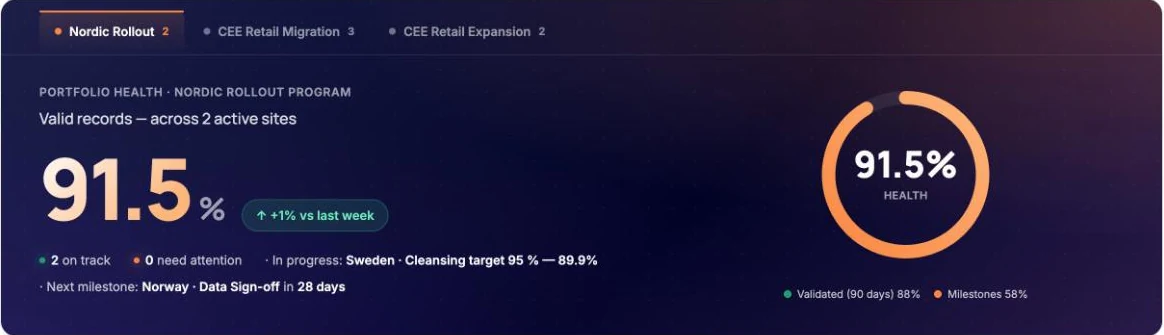
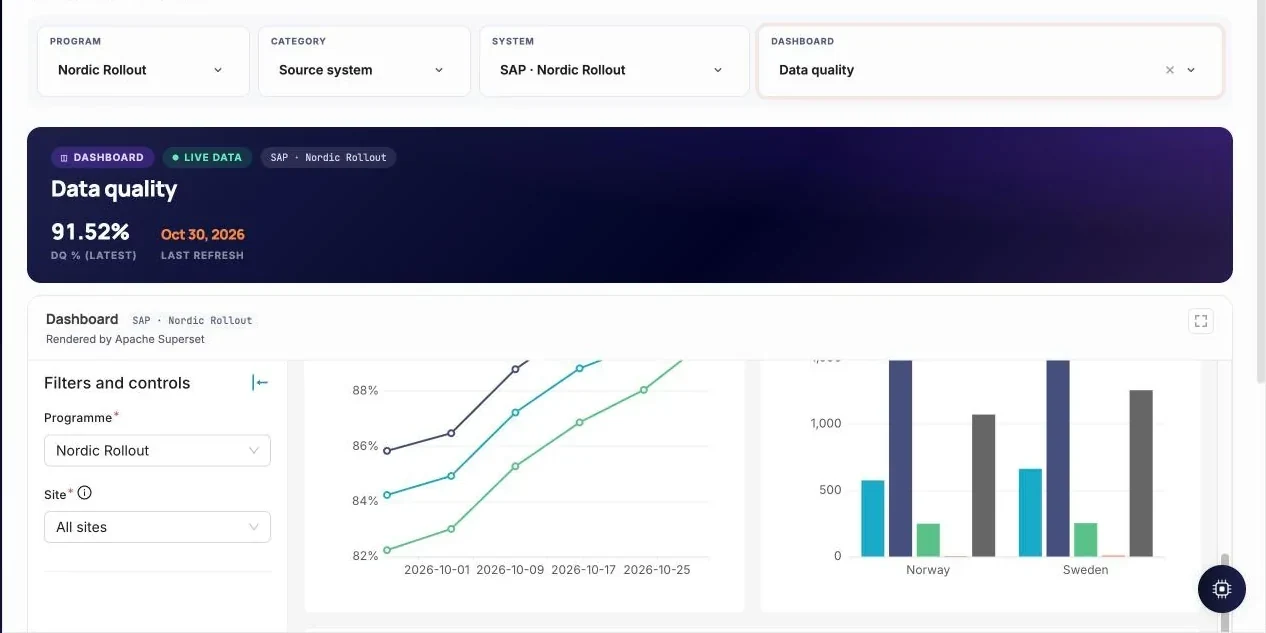
Data-quality dashboard — trend per site, live on the same data
02
vise FieldMap
Mapping drafted by AI, decided by your consultant.
Right after extraction and profiling, FieldMap proposes every field pair and transformation rule with a confidence score and the reason behind it. Your expert approves, edits or rejects line by line; every decision is versioned before anything is transformed.
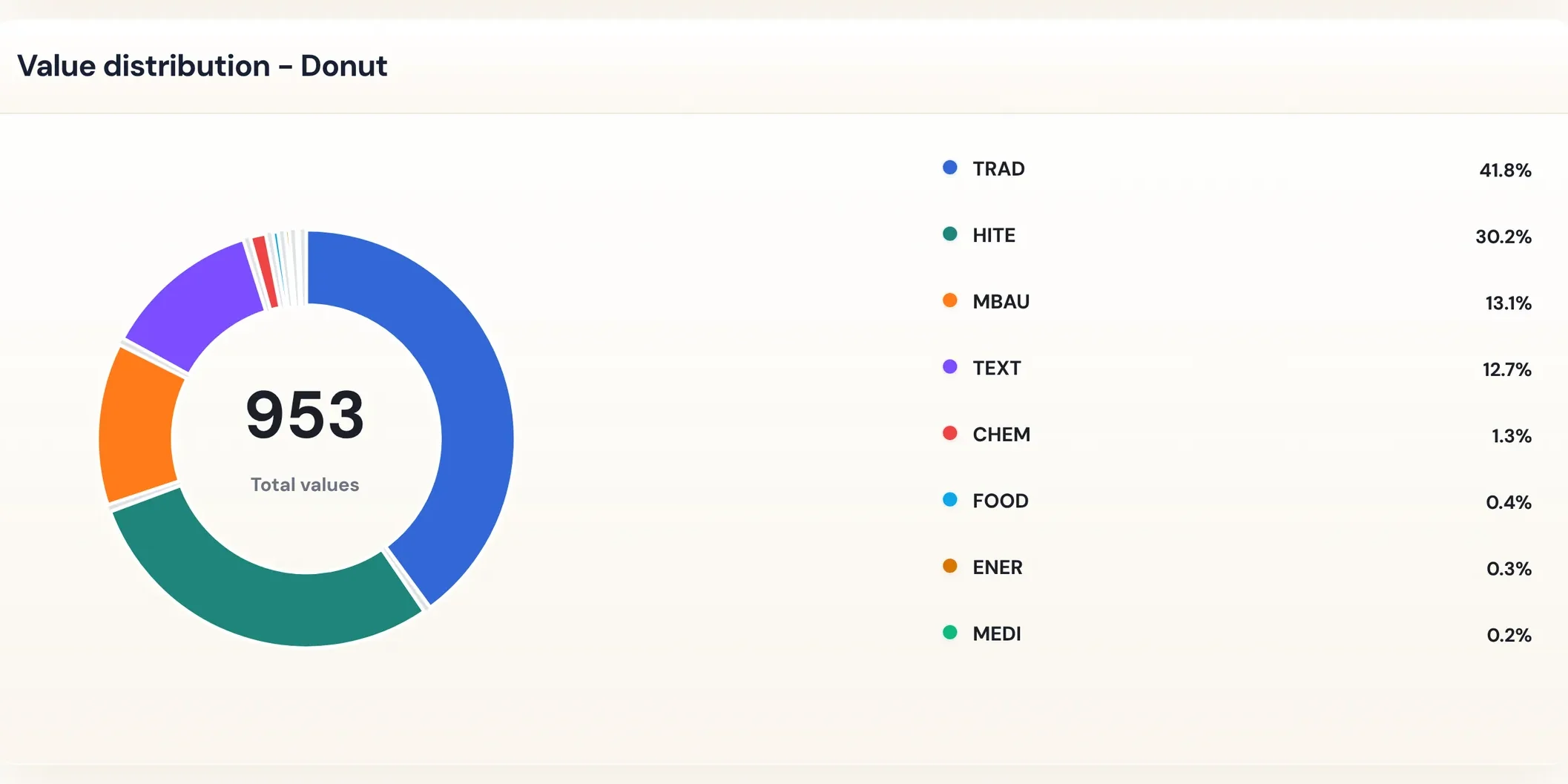
Value profiling — what a source field really contains, before the mapping is proposed
Map values once. Reuse the decisions in every wave.
Business users harmonise payment terms, account groups and the other lists of values before the load. LoV-MAP checks dependencies, flags values the target will not accept and records who approved what — inside vise DMW or next to any ETL.
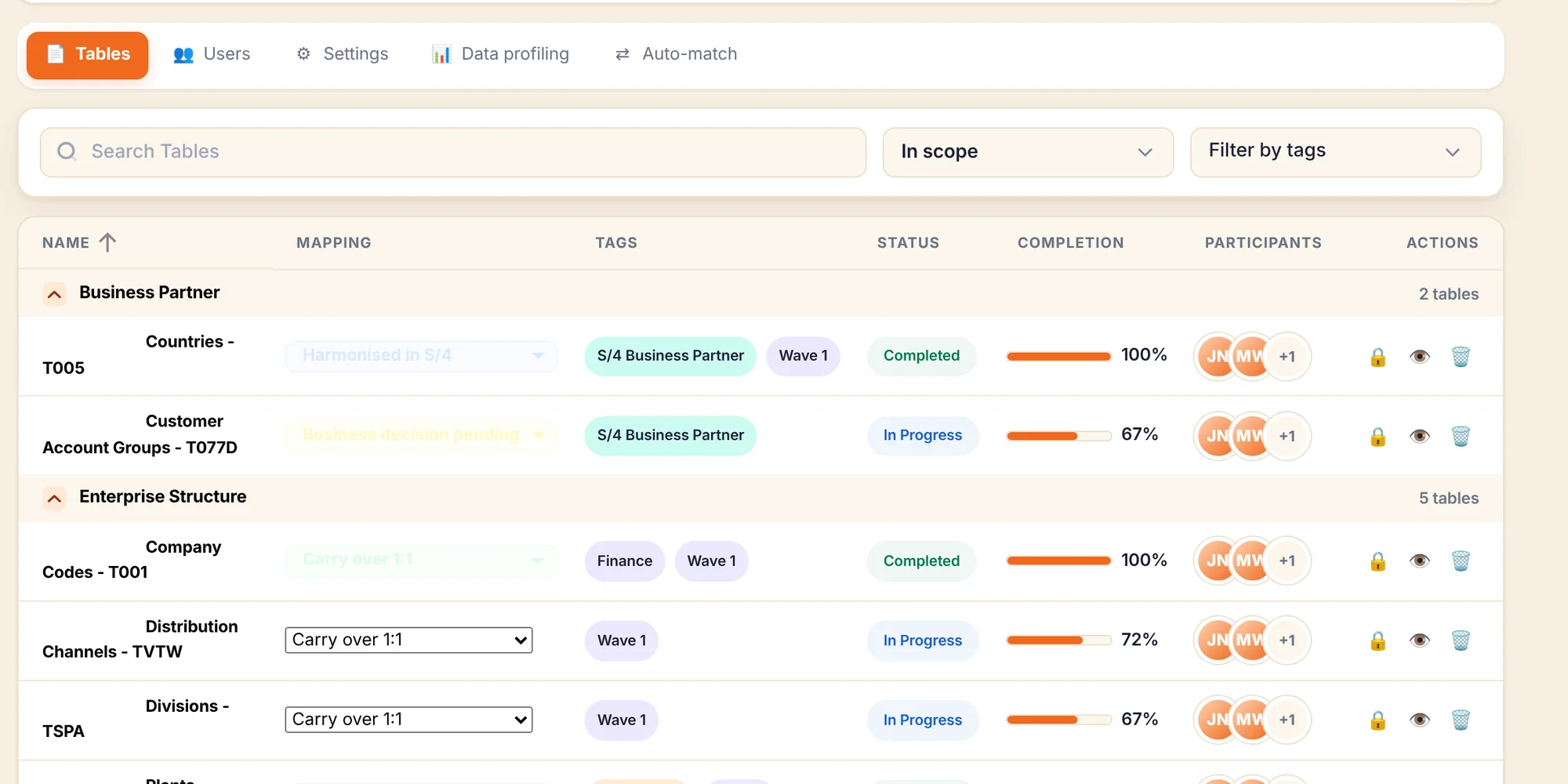
One project, every value table — decision, owner and completion per table
Business teams prepare bulk changes. IT keeps control.
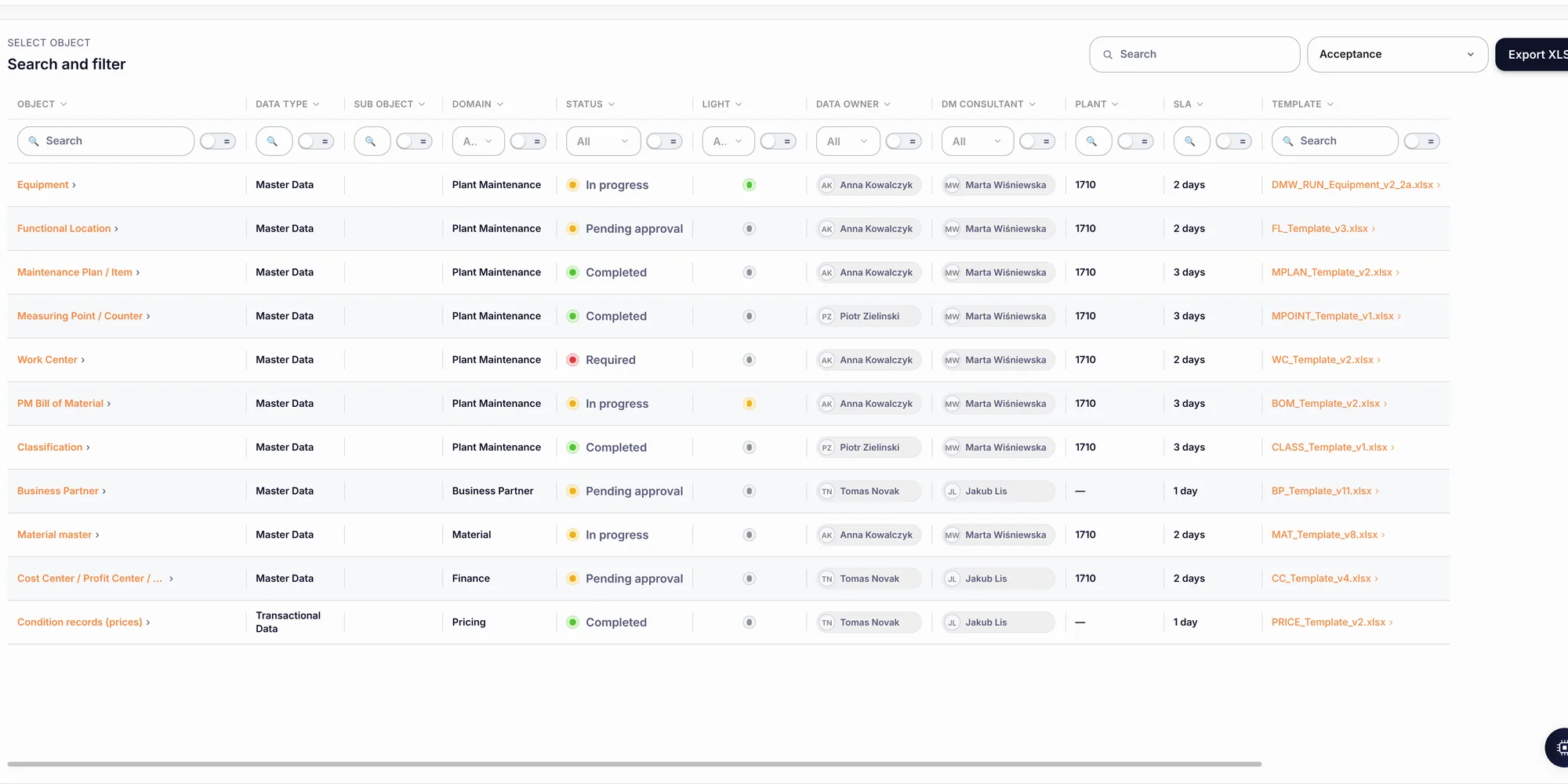
Changes to materials, vendors, prices, plant maintenance or business partners are validated, dry-run, approved by a named person and posted through standard interfaces, with the audit trail written for you. SAP, IBM Maximo, Navision / Business Central.
Work queue — every object with its status, owner and SLA; one row per change in flight
“A simple briefing combined with a deadline was enough to receive a high-quality result on time.”
Since 2017in production at a global brewing group
Severalcontinents with SAP rollouts
Dozens of countriesmigrated from Navision, JD Edwards and legacy sources
For SAP architects
The questions you will ask on the first call, answered here.
01How do you load into S/4HANA?
Standard BAPIs, IDocs and OData only. Never a direct table write. Business Partner goes through CVI like any SAP-approved tool.
02What does the AI actually touch?
Drafts: field mappings, transformation rules, validation rules. Never the target system. Every proposal is versioned, tested in a sandbox and approved by a named person.
03Do you only work with SAP?
SAP is where we come from and where most of the work lands: ECC and S/4HANA are the usual target. But the platform connects to any source and any target — we have loaded into IBM Maximo and Navision / Business Central as well, and read from JD Edwards, Dynamics and legacy systems.
No enterprise licence up front. Per-project pricing, a proof of concept on a real object, and a team that stays after go-live if you want it to.
0130-day proof of conceptOne data object from your system, profiled, validated and mapped. You get a data assessment report and a working project — not a slide deck.
02Per-project licencePriced by sites and user accounts — the more sites, the lower the price per site. Scales from one plant to a multi-country programme.
03Run it with us, or on your ownYour IT runs it, we run it for you under SLA, or hybrid: a Visehub specialist embedded in your team on Teams, the way our longest-standing customer works with us.
Already have a migration quote? Get a second opinion on the data track.
Send us the scope and the quote. You get a written assessment: which objects carry the delivery risk, what the quote assumes about data quality, where the test-migration count is optimistic — and, if it makes sense, our offer for the data track or for the risky objects only.